The Movement Matrices


In every sport, the development of technical and coordinative skills, motor intelligence, and—more broadly—the capacity to acquire new knowledge is closely linked to the growth of cross-disciplinary competencies. In the early stages, fields of knowledge tend to be perceived as separate, leading to increasingly narrow and compartmentalised forms of specialisation. As coordinative and cognitive abilities mature, however, connections begin to emerge—true “synapses” between different elements. Gradually, it becomes clear that many aspects shared across different disciplines are rooted in common principles. Reaching this stage represents a shift to a higher level of awareness, where perceiving the whole becomes just as important as analysing details and specialising.
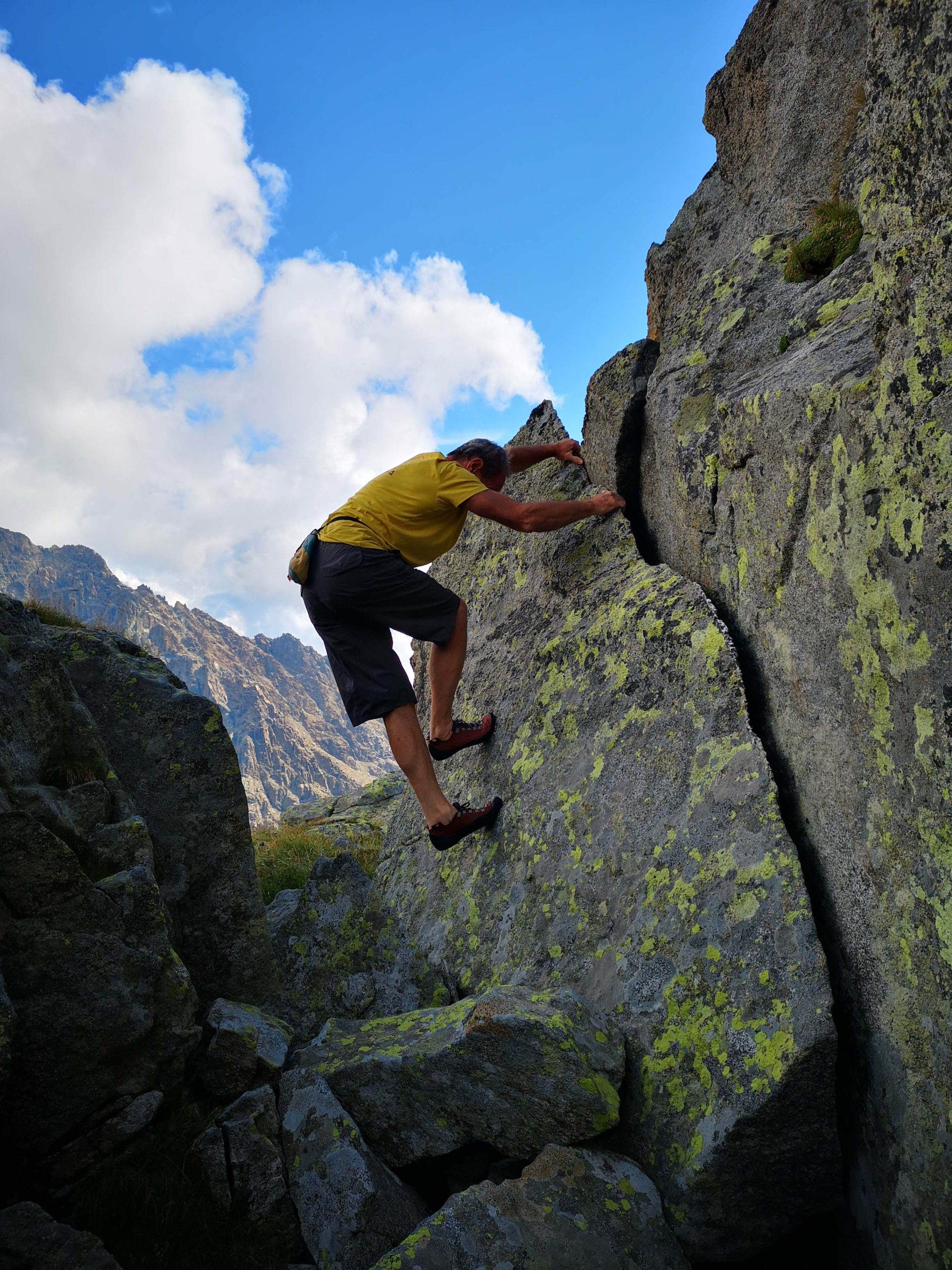
The Movement Matrices emerged at the end of this long process of experience and reflection. As my study of climbing technique grew deeper and more comprehensive, I naturally began to recognise the elements it shared with ice climbing, skiing, and—just as importantly—walking.
The techniques of the Movement Matrices make it possible to practice, learn, and truly understand the fundamental principles of movement outside the specific framework of individual disciplines. This makes learning far more effective, as each technique can be explored and assimilated in conditions of comfort and normality. Attempting to learn these same principles directly within the more complex contexts of climbing, skiing, or ice climbing is, quite simply, much more difficult.
Perhaps the most significant and compelling aspect of the Movement Matrices lies in their ability to foster both bodily and mental awareness. Much is said about the importance of integrating mind and body, yet without a concrete tool, these ideas often remain abstract. The possibility of training all movement techniques—while simultaneously applying correct breathing—creates a complete, accessible practice through which latent potential can be developed in a tangible and experiential way. From a practical perspective, the Movement Matrices support learning not only in climbing (on rock and ice) and skiing, but also play a crucial role in improving balance and coordinative abilities. For this reason, they are also an exceptionally valuable tool in the recovery from certain injuries and disabilities. Finally, they are ideally suited for anyone who wishes to practice hiking and mountaineering—both in summer and winter—in a safe, conscious, and efficient manner.