
Technique and Didactics

The Caruso Method® as a Teaching System
The Caruso Method® is a system that identifies and organises the technical–motor contents related to rock climbing, ice climbing, off-piste skiing, and ski mountaineering, making them easier to learn. It is therefore a valuable tool for instructors and trainers, designed to develop the specific motor skills of students and athletes. While learning the various techniques correctly—both from a practical and a theoretical perspective—is a relatively accessible task (although it still requires commitment, practice, and a genuine willingness to learn and to challenge oneself), knowing how to teach is a far more complex matter.
Technique is the content that can be transmitted and taught. It embodies the essence of movement and the accumulated experience of those who came before us, allowing learning to take place more quickly and with fewer errors. Didactics, on the other hand, concerns teaching itself—that is, how technical content is transmitted—and includes aspects related to psychology, communication, and teaching approaches. The Caruso Method® integrates both Technique and Didactics into a single, coherent system.
Until relatively recently, within the mountain community, it was widely believed that one could teach climbing without even a basic technical understanding of movement. Everything was taught—topics related to safety, meteorology, or the environment—while avoiding what actually represents the core of every sport. In sport, in fact, the primary objective of teaching is to transmit Technique, understood as correct and effective movement, which enables the highest level of performance. Only after this foundation has been established does appropriate training come into play to further raise the level. Neglecting this aspect means overlooking a fundamental element of sporting excellence: technical–motor ability—the most difficult capacity to acquire, but also the one least likely to be lost once it has been developed (unlike strength). Technique and Didactics are therefore complementary aspects, but the latter must always be at the service of the former. Teaching sport without technical content is equivalent to focusing on the periphery while ignoring the centre.
The Caruso Method®, with all its techniques and progressions, is first and foremost Technique. At the same time, however, it is a true Method in the strict sense of the word, because its techniques are applied according to precise didactic principles that have been carefully identified and selected from among many possible options. These include concepts specifically developed by me, such as the Focal Point (FP) and double-spiral learning.
In the world of climbing and mountaineering, there is still a widespread belief that the strongest climber is also the best teacher. In almost every other field—sporting or otherwise—it is well known that teaching ability is independent of performance. In reality, very few individuals excel in both areas. To teach well, one must possess qualities that those focused primarily on individual performance often do not develop. At the same time, however, one must have a thorough theoretical and practical knowledge of the discipline being taught—both knowing and knowing how to do.
Today, there are certified Caruso Method® Climbing Masters (MAS) authorised to teach the Method. They have been trained under my direct supervision within IAMAS – Italian Association of Sport Climbing Masters, the first professional association of climbing instructors in Italy, officially recognised under Law 4/2013. All IAMAS MAS follow the same structured training pathway, aimed not only at deepening their knowledge of the techniques and principles of the Method, but also at developing the didactic skills necessary to teach climbing effectively.
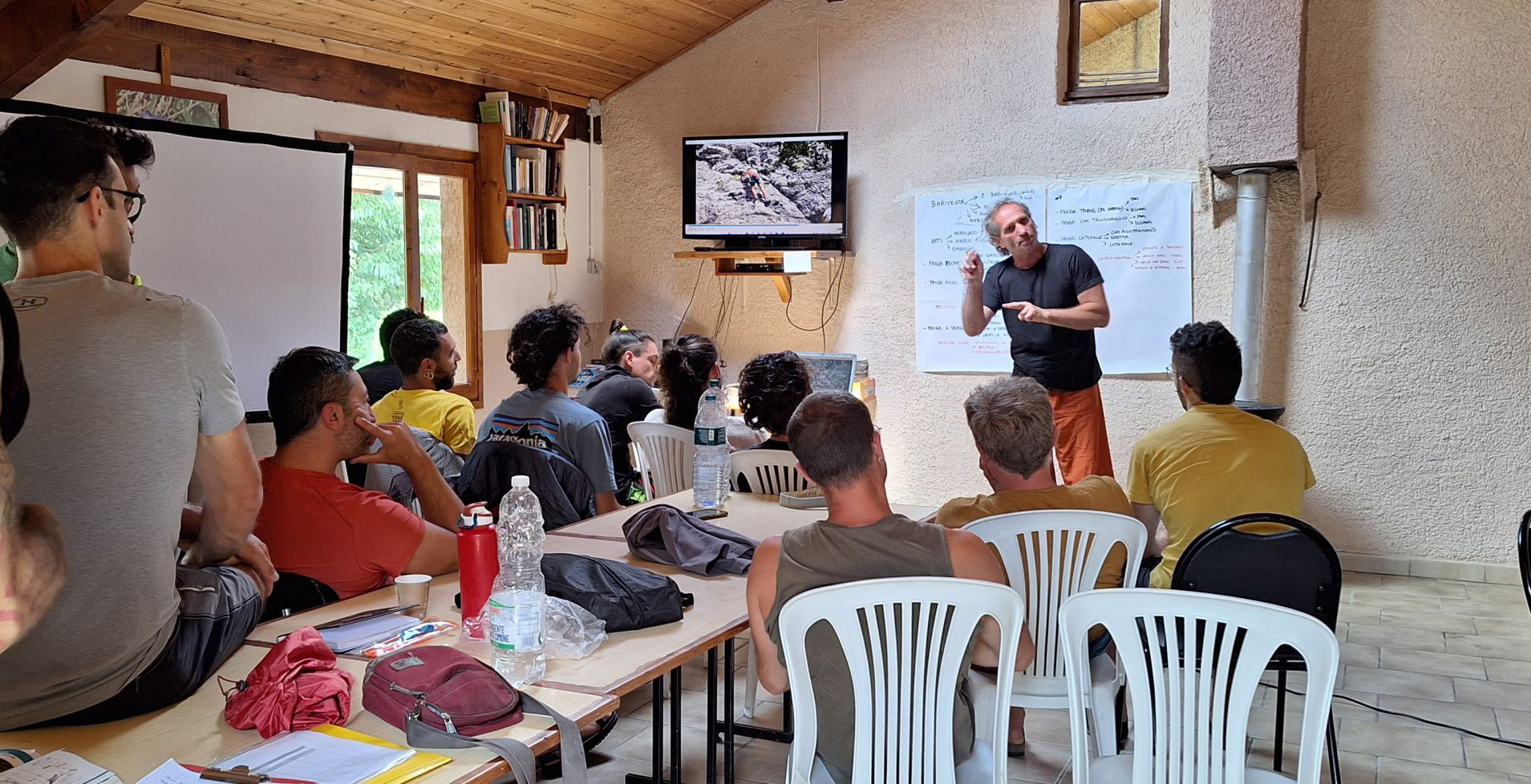

The Role of an Instructor
Instructors bear a great responsibility, because they act upon students at a cultural, physical, and mental level, shaping and enriching their knowledge, beliefs, behaviours, and abilities. Poor teaching can trigger chains of errors that propagate from one student to another—and even beyond. Errors can be compared to viruses: the more an instructor carries (that is, the higher the “viral load”), the more they transmit. It follows that, throughout their training path, a good instructor must strive to minimise flaws and gaps, at least within the specific field in which they teach.
This does not mean that an instructor can be perfect or omniscient—perfection does not belong to this world. What truly makes the difference is, first and foremost, the willingness to embark on a path of continuous improvement. This is also the highest goal of any genuine sporting and educational activity. A good instructor, therefore, seeks to purge their teaching as much as possible of errors, flaws, and subjective interpretations, without ever feeling that they have “arrived.” To recall Socrates’ lesson: those who believe they have nothing left to learn automatically stop learning and close themselves off to any form of innovation or enrichment, which may come in the most unexpected ways and at the most unexpected times. Moreover, anyone who interrupts their learning will inevitably, sooner or later, regress. Teaching then becomes rigid, habitual, and increasingly lifeless.
Another defining trait of a good instructor is the ability to teach only what they truly know and understand—what they can explain in detail when necessary, but also synthesise effectively; what they can illustrate through meaningful examples and demonstrations. In our case, the content to be transmitted is climbing technique, which must be objective and valid for everyone, not based on subjective viewpoints or the partial and limited beliefs of a single individual.
An often overlooked but crucial aspect of good teaching is the protection of the student’s health. This requires an understanding of the relationship between correct movement—which is the object of Technique—and injury prevention and overall well-being. Technique, therefore, has multiple values: it not only identifies and studies the most effective and natural movements, but also plays a fundamental role in preventing incorrect and inefficient movements that can negatively affect health.
Rock climbing and Injury Prevention
In general, all movements that involve excessive joint angles or fully extended joints are potentially risky. For example, the overuse of extreme crimping, excessively wide steps that place heavy stress on the knees, or the overloading of joints—such as dynamically catching a hold with the arm fully extended after a dyno—leads to progressive wear. Very often, joint stress is not immediately perceived and only becomes evident later, when it manifests as an injury. For this reason, such movements are described as wearing or degenerative.
The most harmful effects occur when significant joint flexion is combined with torsion. This mechanism is comparable to the motion used to break a chicken bone. The lolotte is perhaps the clearest example of this dynamic. This position, which is a variant of the lateral stance, is comparable to what the Method defines as the "fifth position" of the Fundamental Progression: a disadvantageous body position that should be used only when more natural and efficient positions are not available. In general, such positions do not need to be taught, as they often emerge automatically when technique is lacking. For instance, the fifth position—although the least advantageous among frontal stances—is very common among beginners who have not yet learned alternative solutions. In conclusion, the purpose of technical knowledge is to minimise the use of disadvantageous positions, which are also the most damaging. Such positions should therefore be adopted only when no other option is available.


Didactic Approaches
Technique and Didactics are two sides of the same coin. A complete Method combines rigorous technical content with effective teaching strategies. When speaking of didactics, the most important concept, in my view, is Maieutics. An instructor who knows how to apply this Socratic approach facilitates learning, brings it to life, and—above all—enables the student or athlete to achieve a deep and genuine understanding.
Personally, I believe that rigid divisions—between frontal, vertical, horizontal, or peer-to-peer education, or between analytical, global, inductive, and deductive methods—are merely the result of partial perspectives that alternate over time, becoming fashionable or falling out of favour according to current trends. When these approaches are experienced in opposition, they often generate theoretical and mental fractures, creating disharmony that hinders the dissemination of sound teaching. Within Maieutics, both technical and didactic aspects find their proper place. It unites an overall vision with focused attention on the individual elements that make up the whole—the subject being taught.
Within this approach, the Master is not only the one who knows more or who holds the authority to define the path to follow, but also the one who helps the student develop their potential. Above all, the Master is someone who can adapt technique and teaching to each situation and moment. Rather than imposing knowledge, they encourage discovery and the recollection of what is already known at deeper levels of awareness. This perspective also reflects the concept of Magister ludi, in which authority is not an end in itself, but a means to achieving optimal learning and true understanding.

The Three Channels of Communication and Learning
There are several channels of communication—or learning—that both instructors and students should recognise and develop. In rock climbing, the Caruso Method® three primary channels:
- Explanation, which stimulates the student’s theoretical channel
- Demonstration, which activates the visual channel
- Correction, which engages the perceptual/sensory channel
A good instructor masters all three and can move fluidly from one to another. To achieve this, the following functions must be specifically trained:
- mental/theoretical
- visual
- perceptual/sensory
- technical–motor
- emotional
- breathing
Each individual naturally has preferred channels or areas of strength. Typically, improvement is sought by insisting on these strengths, as this appears to be the easiest path. In reality, this approach—only seemingly efficient—is the longest and least fruitful, because it does not help eliminate involuntary automatisms that ultimately limit freedom and progress. True development requires stepping outside one’s comfort zone and working on all aspects, especially weaknesses, to eliminate flaws and gaps.
This is important for learners, but it becomes decisive for instructors. If an instructor has not harmoniously developed these channels, they will be unable to communicate effectively with all students. If, for example, a student requires a thorough theoretical explanation to understand, and the instructor lacks this ability, communication fails. The same applies to demonstration and to the development of correct sensation: without these skills, effective teaching is impossible.
When working with the three learning channels, another quality becomes crucial: coherence. There must be perfect correspondence between what is said and what is demonstrated or done. Otherwise, confusion, doubt, and uncertainty arise, potentially undermining confidence and safety. An instructor who cannot say what they do—and do what they say—cannot be a good instructor.


Choosing the Terrain
Learning is closely related to the quality of motor execution. Well-executed movement enhances sensitivity and, more broadly, awareness. The ability to perceive correct movement can be developed and must be trained. For this reason, an instructor’s ability to choose appropriate terrain is essential.
The terrain must be suited to:
- the abilities of the student or athlete;
- the correct execution of the technique being practised.
Too often, instructors choose a crag for course outings based on personal interests—for example, selecting routes they wish to climb during breaks—assuming that “it makes no difference.” In such cases, one is clearly far removed from the essence of true teaching. I have met many people who were deeply and lastingly traumatised by their first climbing experiences as beginners; some even abandoned climbing altogether as a result. More generally, it is evident that without solid technical knowledge, it is already difficult to identify the most suitable terrain for learning to climb, let alone to match specific terrain to particular techniques or progressions.
Once a technique has been correctly introduced, it should then be practised on progressively increasing levels of difficulty, while always maintaining a strong focus on correct execution, in order to continue improving movement quality.
The Schools of the Caruso Method®
I have always believed that sharing knowledge and transmitting it to those who are interested is the right thing to do. The real challenge, however, lies in teaching correctly while avoiding the spread of errors and misconceptions. Until the mid-1990s, it was considered normal not to teach movement technique in climbing courses (except for a few specific techniques, such as the Dülfer). Today, at least in principle, technique can no longer be ignored. The advantages offered by the technical and didactic content of the Caruso Method®, compared with the old casual and so-called “instinctive” approach, are so evident that, over time, the most important associations in the field asked me to conduct specialised training programmes for their instructors. This initially led to a positive cultural shift and to the rapid dissemination of certain techniques.
In recent years, however, while courses claiming to teach the Caruso Method® have multiplied—something that naturally pleases me—I have also observed that the content transmitted is often distorted, if not entirely incorrect. This risks undermining the effort made to introduce an effective system built on scientific foundations, one that develops motor skills while preserving health—ultimately, a system based on teaching quality.
The reasons for this are many. The main one is the widespread belief among climbing instructors that the techniques of the Method can be learned in just a few lessons. This is comparable to an instructor with no specific training believing they could perform a one-arm pull-up after two or three sessions—and then expecting their students to do the same. Learning and executing the Method’s techniques correctly requires time and practice; teaching them requires having fully assimilated many other elements, both conceptually and motor-wise. Rather than teaching incorrect content, it would be preferable to maintain an instinctive approach—at least in that case, errors would spread randomly rather than systematically.
It must also be acknowledged that initiatives inspired by genuine intentions to improve are often distorted, rather than supported, for unfortunate reasons related to ego or power struggles.
For all these reasons, in 2009, IAMA – International Academy of Mountaineering and Climbing was founded as the first official school of the Caruso Method®. Established within the Alpine Club of San Marino, IAMA operated under my direction for over ten years. Through IAMA, the first official climbing instructors of the Method were trained, following a programme appropriate to the complexity of its content. IAMA also trained the first instructors of the Caruso Method® ski mountaineering.
This experience later led to the creation of IAMAS – Italian Association of Sport Climbing Masters, founded in February 2020 during the COVID emergency. IAMAS is the first professional association of climbing masters in Italy, officially recognised under Law 4/2013. Within this association, I serve as Technical Supervisor and Guarantor of Training Quality.
The IAMAS MAS (Levels I and II), together with a limited number of foreign instructors and mountain guides, are the only professionals officially authorised to teach the Caruso Method® in climbing. Here you can discover some of the instructors with whom I collaborate.
MAS are professionals trained directly by me and are qualified to operate independently both indoors and outdoors. The IAMAS MAS training pathway consists of 400 hours required to obtain Level I certification, plus an additional 100 hours for Level II. To obtain an instructor–trainer qualification, a further 100 hours of training are required. All IAMAS MAS are required to attend regular refresher courses (continuing professional development); failure to do so results in loss of certification. This is therefore a demanding and highly qualified training pathway. After myself, instructor–trainer MAS and, subsequently, Level II and Level I MAS are the most knowledgeable professionals in climbing technique and in the Caruso Method®, both from a theoretical and a practical perspective.

News & Video
2 November 2026
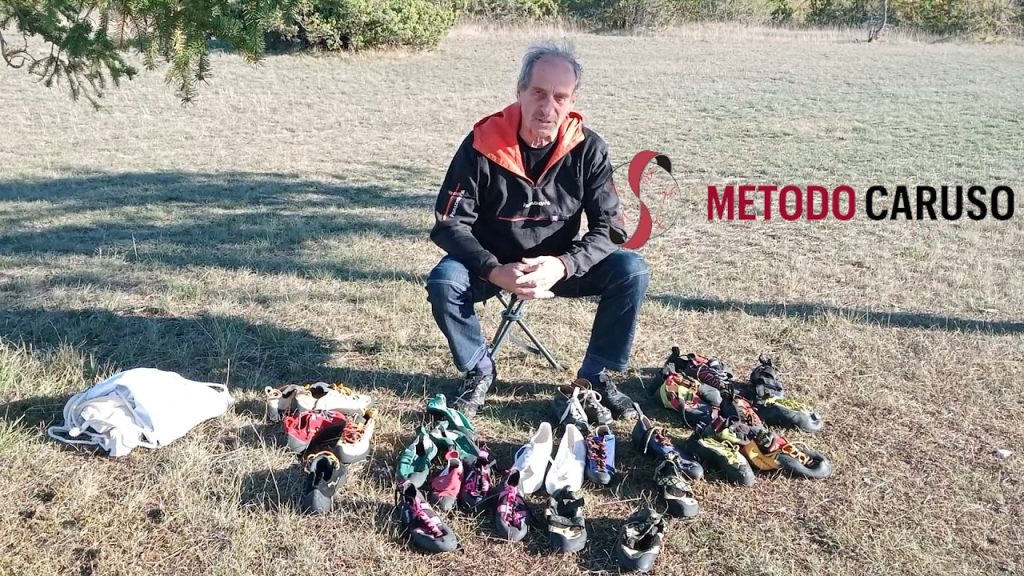
La storia delle scarpette e la nascita di Paradigma
Le scarpette d’arrampicata non sono state ideate sulla base di principi biomeccanici. Quindi, non si cercava di favorire il movimento naturale, basato sulla tecnica del movimento. Dalla forma flessa in su, ripresa dalle scarpe da camminata, si è passati alla forma piana e poi alla forma arcuata verso il basso con le dita rattrappite. Questa forma non è certo una buona cosa per la salute del piede e non consente alle dita (dei piedi) di esprimere al meglio la forza sugli appoggi. Infatti, le dita rattrappite portano le unghie verso il basso e non permettono di appoggiare correttamente le dita sugli appoggi. Oggi Paradigma nasce da un’idea completamente nuova, realizzata grazie alla più avanzata tecnologia che permette alla gomma di assumere la forma voluta, con spessori differenziati in funzione della forma naturale del piede in posizione di presa sugli appoggi.
Leggi di più →
19 October 2026
Non fatevi ingannare: come la Tecnica smaschera le false credenze
La tecnica è allo stesso tempo mezzo e fine. Un bravo insegnante si pone l’obiettivo di formare gli allievi non solo tecnicamente ma anche umanamente. Infatti, la tecnica permette anche di acquisire maggiore conoscenza e consapevolezza, grazie alle quali è possibile capire e smascherare le false credenze.
Leggi di più →
5 October 2026
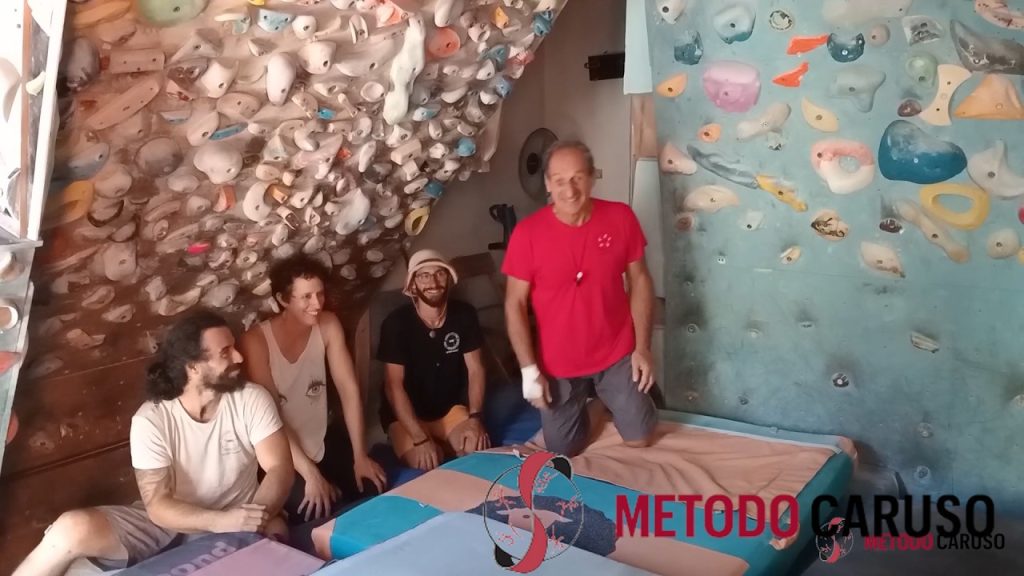
Efficacia VS Efficienza
I profani guardano ciò che appare, cioè se il risultato viene raggiunto o meno. Gli esperti vedono il “come”. Ai loro occhi avviene un cambio di paradigma: raggiungere il risultato diventa secondario rispetto al diventare efficienti. Quando si è efficienti si ottiene il risultato riducendo al minimo lo spreco di tempo, sforzo o risorse.
Grazie a Simone Pedeferri per la disponibilità della sala.
Leggi di più →
21 September 2026
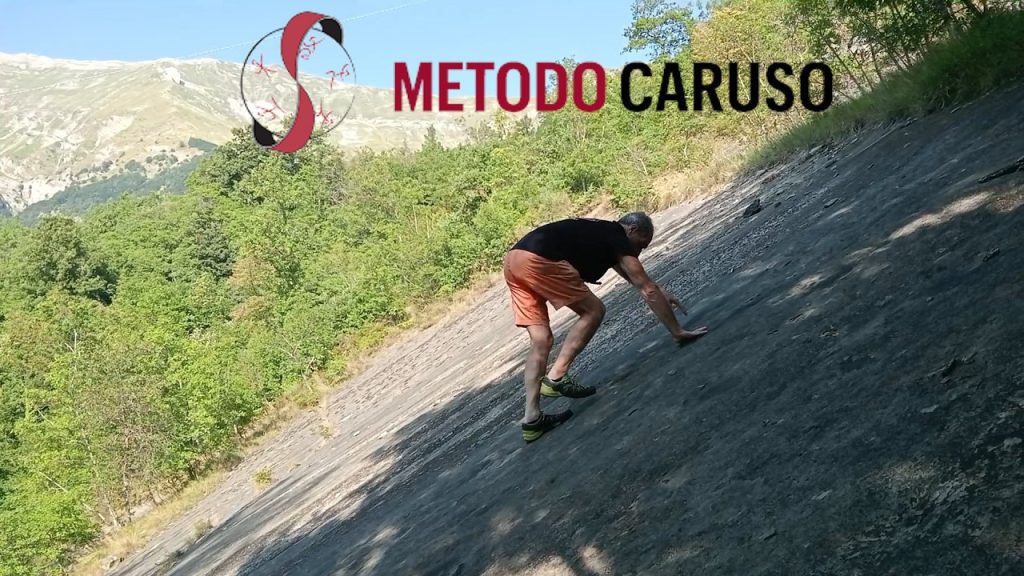
Quadrupedia, Tecnica e Metodo Caruso
Inizialmente la quadrupedia indicava gli esercizi che potevano essere eseguiti carponi sul piano, a quattro zampe. Le Tecniche del Metodo hanno poi dato un grande impulso alla quadrupedia che ha iniziato a includere il movimento del corpo a terra, sia con le ginocchia appoggiate che sollevate, iniziando a considerare lo schema incrociato degli arti. Ma a parte il potenziamento muscolare e la stabilizzazione delle articolazioni, la Tecnica si allena e si migliora soprattutto mettendo in pratica le differenti progressioni del Metodo su un pendio, quantomeno leggermente inclinato. Scopriamo come eseguire correttamente il movimento con le Tecniche del Metodo.
Leggi di più →
7 September 2026
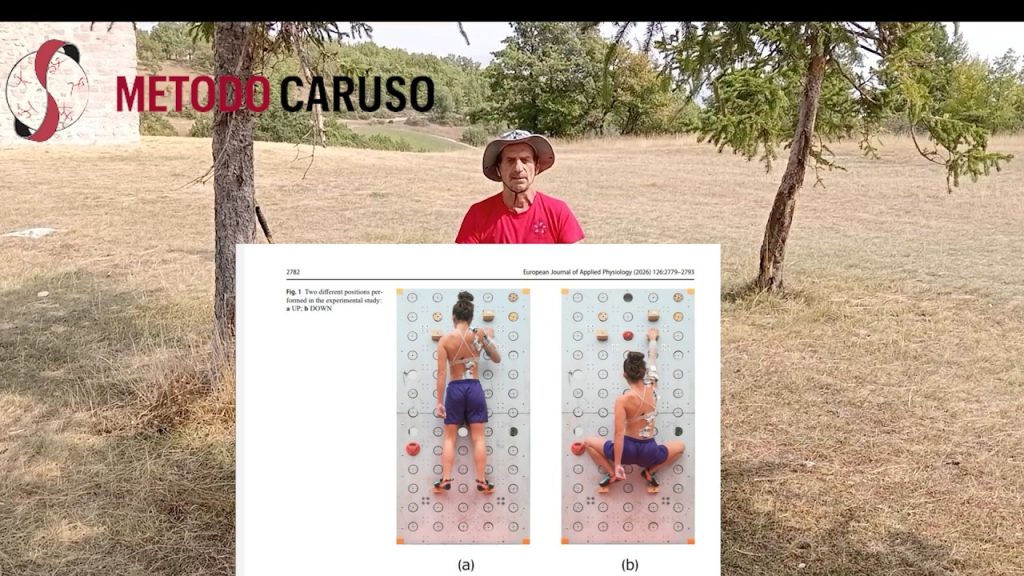
Braccia flesse o tese: approfondimenti
Lo studio di Eleonora Bonelli e co. ha suscitato interesse sui social ed alcuni hanno tratto conclusioni poco pertinenti. Grazie alle Tecniche del Metodo possiamo analizzare gli aspetti più utili e interessanti di questo studio. Ma soprattutto si spiega il motivo per il quale le conoscenze dei Maestri IAMAS sono avanti di alcuni decenni: per imparare correttamente l’arrampicata è fondamentale l’insegnamento “diretto” sul campo che possa permettere di sviluppare correttamente i Canali Teorico e Percettivo (vedi l’Apprendimento integrato del Metodo). Cerca i Maestri del Metodo su www.metodocaruso.com
Leggi di più →
1 September 2026
Lite sul Grossglockner: riflessioni
Una lite in montagna tra una guida alpina e un alpinista fa riflettere. Sicuramente la reazione della guida non è accettabile, ma probabilmente dietro questo episodio ci sono problematiche importanti, e anche gravi, che meritano di essere analizzate. In questo video si cerca di fare luce sulle cause che sono dietro a episodi come questo che, se non si fa chiarezza, sembrano destinati ad aumentare, causa l’eccessiva frequentazione delle montagne da parte anche di frequentatori poco preparati. Questo è il link relativo all’episodio in questione: https://www.youtube.com/watch?v=vON-2iFo67s
Leggi di più →
10 August 2026
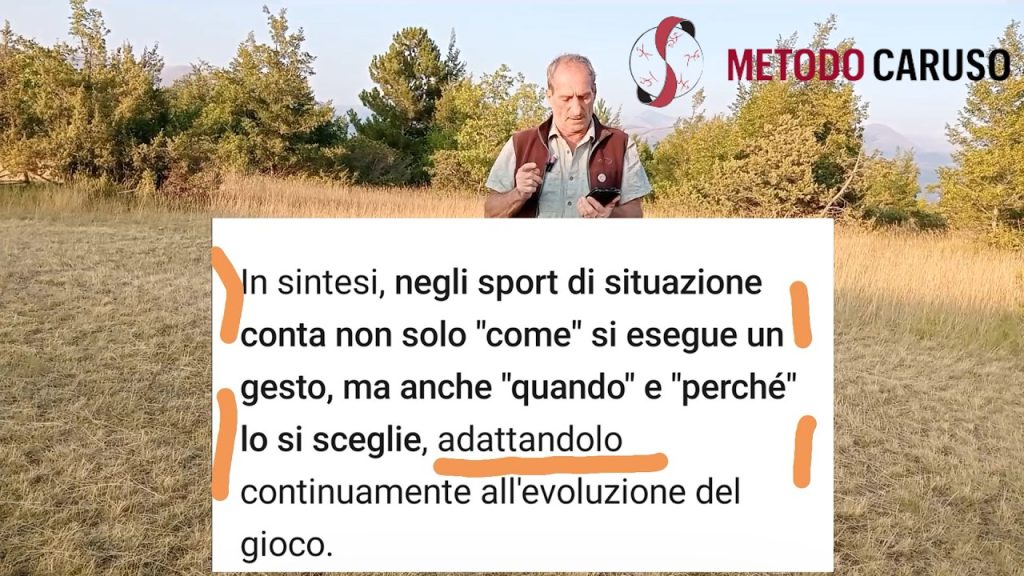
La Tecnica è indispensabile in arrampicata e in tutti gli sport: a prova di analfabetismo funzionale
In questo video sfatiamo definitivamente la credenza secondo la quale in arrampicata non esiste Tecnica. Questa credenza deriva dall’errore antiquato che definiva l’arrampicata una attività casuale o istintiva. Le nuove conoscenze hanno definitivamente debellato queta fallacia culturale e hanno definito finalmente l’arrampicata come sport, alla stregua di tutti gli altri. D’altronde, le conoscenze tecniche relative a tutti gli sport non lasciano dubbi: confrontiamole per dissipare gli ultimi residui di una mentalità vetusta.
Leggi di più →

27 July 2026
Laterale chiuso o completo: un aspetto tecnico fondamentale
Credere che i piedi si appoggino sempre di punta è un grossolano errore che deriva dalla mancanza di conoscenza della Tecnica. La posizione del tallone è determinante ai fini della gestione del peso: per questo bisogna ampliare il bagaglio motorio e imparare ad appoggiare i piedi fino a raggiungere la linea dei metatarsi, sia in assetto frontale (lato interno) che laterale (lato esterno).
Leggi di più →
13 July 2026
Arrampicare in discesa: video su vostra richiesta
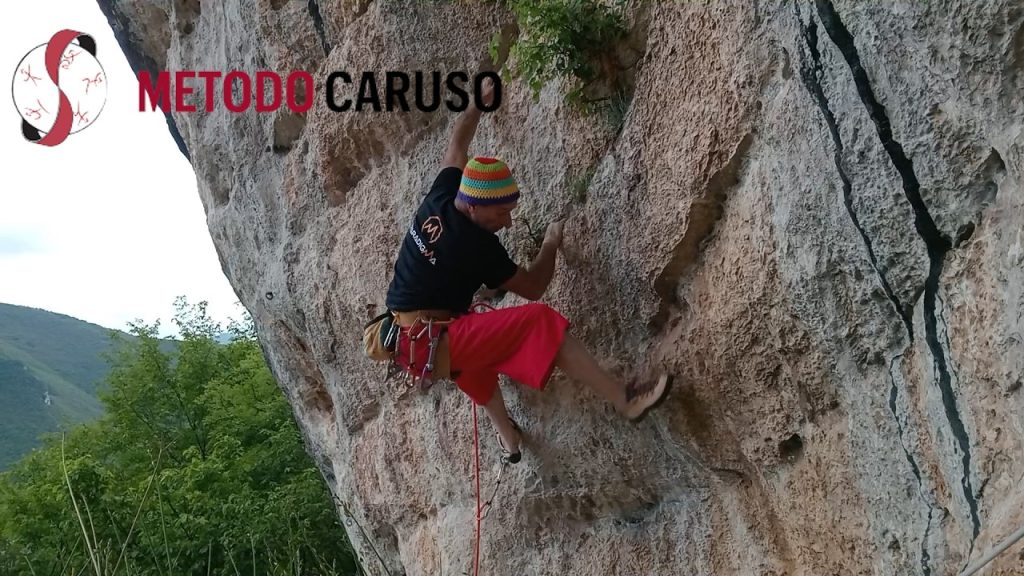
In questo video si analizzano gli aspetti tecnici peculiari dell’arrampicata in discesa. Grazie ad essa è possibile migliorare l’adattamento al movimento e agli aspetti psicologici, utili certamente per l’alpinismo ma anche per acquisire maggiore sicurezza in falesia.
Leggi di più →
29 June 2026
Dal Mito di Fetonte alla nascita della Tecnica e della Civiltà
Una attività sportiva completa unisce realmente mente e corpo. Ma come è possibile farlo? La parte meno conosciuta del mito di Fetonte permette di analizzare i valori che sono alla base dello sviluppo della Tecnica del Movimento, dell’arte e della civiltà.
Leggi di più →